

Welcome to Jungian Somatics: Movement for Trauma - Spring 2024
“We would do well to think of the creative process as a living thing implanted in the human psyche.” C.G. Jung
Please ensure you register for our Zoom meetings by following this link.
How To Use The Learning Landing Page:
You will have access to this page for ONE MONTH after the training completion date. After that date (07/24/2024), you will no longer have access. Please download, bookmark or save any materials on this page, including the Zoom recordings, prior to that date as we will not be able to provide access after that time.
Each week we will list additional resources on this page for you to watch or read prior to the next week’s session. So, for example, Week One’s work is to be completed prior to that session.
A Note About Language in Jungian Writing:
The social and historical context in which Jung's original writings and precedent-setting Jungian scholars were published (i.e., Jacobi's work of 1942 and Whitmont's publication in 1979) reference ideas and concepts of their time. We are mindful that you will likely encounter language you find insulting or demeaning and which may seem inherently ableist, racist, colonial or gender-binary. We have included these texts because of their seminal importance in appreciating the long and evolving narrative arc of Jung's philosophies and their ongoing impact on our contemporary work.
As post-Jungian scholars and educators, we endeavour to constructively adapt the texts of Jung and subsequent scholarship in ways that are universally applicable, equitable, accessible, and culturally sensitive to the realities and norms of today's world. We welcome all discussion and your lived experiences with what can be uncomfortable material as we move forward together.
WEEK ONE: THE BODY AS AN ALCHEMICAL CONTAINER FOR INDIVIDUATION
Resources (Prior to First Session!):
Either The Symbolic Quest by Edward C Whitmont or The Psychology of C.G. Jung by Jolande Jacobi. If you have challenges with print material, we recommend The Way of Individuation by Jolande Jacobi, available in audio form on YouTube here.
James Hollis on complexes- video
On Reading Jung’s Alchemical Works- article
The Process of Individuation- article
The Divided Brain- video
Recommended Tools for the Course:
Paper or journal and art materials (colored pencils, crayons, pastels, or whatever you like) for creative practice together
Some sort of small ball (such as tennis ball, Yoga Tuneup ball, etc). Preferably not too hard (no lacrosse balls) and if it bounces, even better. I like this one.
A dowel, broomstick, or walking stick
A yoga block, book or plate
An object you can balance on your finger (small Jenga blocks are a great tool for many types of practice)
For Additional Exploration:
This Jungian Life Podcast about complexes
James Hollis excerpt from Swamplands of the Soul
Frith Luton on Understanding the Psychological Complex
Week One Movement Practice Video
WEEK ONE POWERPOINT PRESENTATION
Password: vLGb+T6Y
WEEK TWO: DUAL AWARENESS
Please bring to session, if possible:
Some sort of small ball (such as tennis ball, Yoga Tuneup ball, etc). Preferably not too hard (no lacrosse balls) and if it bounces, even better. I like this one.
A dowel, broomstick, or walking stick
For Additional Exploration:
Week Two Movement Practice Video
Bonus Practice: Taking in the Good
WEEK TWO POWERPOINT PRESENTATION
WEEK TWO RECORDING Password: XeA3#1wL
WEEK THREE: BREATH AS A DOORWAY INTO THE UNCONSCIOUS
Resources (Prior to Session):
Core Stability From the Inside Out
For Additional Exploration:
Jennifer Snowdon, Integrative Breathing Therapist and Buteyko Educator
Study: The influence of breathing on the central nervous system
Article: Anatomic connections of the diaphragm: Influence of respiration on the body system
Poem: Diving Into the Wreck by Adrienne Rich
Lionel Corbett: Jung’s Approach to Treatment of Psychosis
Week Three Movement Practice Video
20 Minute Reset Your Breath Video (with Laura)
WEEK THREE POWERPOINT PRESENTATION
WEEK THREE RECORDING Password: 4.#hy49+
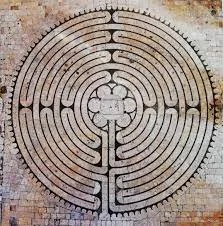


WEEK FOUR: THE NEUROBIOLOGY OF CREATIVITY:
Resources (These can be read over Weeks Four and Five):
Jung and the Neurobiology of the Creative Unconscious
Introduction to Jung and Active Imagination (you can skip “Key Selections” from pp 17-19")
For Additional Exploration:
Article: The remarkable power of holding hands with someone you love
Study: Two hands and a tale: When gestures benefit adult narrative comprehension
Study: Embodied metaphors and creative “acts”- you can read more about this in Annie Murphy Paul’s book, The Extended Mind (see bookshelf)
See the bookshelf (top right of the page) for resources on active imagination, Jungian approach to drawing and art therapy, and cultural complexes.
Brief and entertaining TED Talk on pain science
Two potential further resources for your mandala practice: Creating Mandalas; The Mandala and Visions of Wholeness within Tibetan Buddhism and Jungian Psychology
Joan Kellogg’s Mandala Assessment Research Instrument (mentioned in this session).
Anxiety and the Gift of Imagination (children’s book Jane mentioned)
Week Four Movement Exercises PDF
Week Four Bonus Hand Video (10 min) Grip strengthening tools referenced in bonus hand video— you can also use a rubber band and a ball!
Why writing by hand beats typing for thinking and learning: https://www.npr.org/sections/health-shots/2024/05/11/1250529661/handwriting-cursive-typing-schools-learning-brain
Hilma af Klimt: article on her work
WEEK FOUR POWERPOINT PRESENTATION
Passcode: %x%cY2g&
WEEK FIVE: EMBODIED ACTIVE IMAGINATION:
Resources (Prior to Session):
See Week Four Resources
For Additional Exploration:
Inspire by FM practice with Elke Schroeder
Jung’s Word Association Experiment
Book shared by Sara- Healing Trauma with Guided Drawing
Martin Shaw: The Hunter and the Fox Woman
WEEK FIVE POWERPOINT PRESENTATION
WEEK FIVE RECORDING Passcode: ^EybS69Z
WEEK SIX: EXPLORING TRAUMA AS A SPIRITUAL INJURY
Resources (Prior to Session):
Donald Kalsched: This Jungian Life, Trauma and the Informed Heart
Awesome Awe: The Emotion That Gives Us Superpowers
Murray Stein on Jung’s Map of the Soul
For Additional Exploration:
The Healing Power of the Numinosum (article)
Lionel Corbett on the Religious Function of the Pysche (note that the actual content starts at approx 20:30)
Donald Kalsched- Hope vs. Hopelessness in the Psychoanalytic Situation and in Dante’s Divine Comedy
Interview shared by Willa (OnBeing) on nature’s ordering principle
WEEK SEVEN: EMBODIED CO-TRANSFERENCE:
Resources (Prior to Session):
Mario Jacoby: The Analytic Encounter (an excerpt from the full book, which you can see here).
For Additional Exploration:
WEEK SEVEN POWERPOINT PRESENTATION
WEEK SEVEN RECORDING Passcode: up6a.xjU
WEEK EIGHT: SOMATICS OF DREAM INTERPRETATION:
Resources (Prior to Session):
*Please bring a dream to the session if you have one you’d like to work with.*
John Betts: Dream Interpretation
Frith Luton: The Art of Interpreting Dreams
For Additional Exploration:
Dreams: A Portal to the Source by Edward C Whitmont
WEEK EIGHT POWERPOINT PRESENTATION
Passcode: B?&QQVI6
optional CERTIFICATE OF COMPLETION requirements:
If you are interested in receiving a Certificate of Completion:
You must have attended all of the live sessions or if you were unable to attend live, please send a reflection paper for the missed sessions. This might consist of pictures of the drawings you completed with a small write-up beside each. 250 words is adequate for each session and need not be formal.
Whether you could attend live or not, submit a final 2-3 double space paper reflecting on what from the training you would like to carry forward into your personal or professional life OR a final drawing, movement video or creative piece to express your experience of the training or something you connected with specifically in the training.
Both the short reflection pieces (if not attending live) and the final paper are due by July 31, 2024 and can be submitted to laura@janeclapp.com. If you need an extension, please email us at the same address to let us know.